
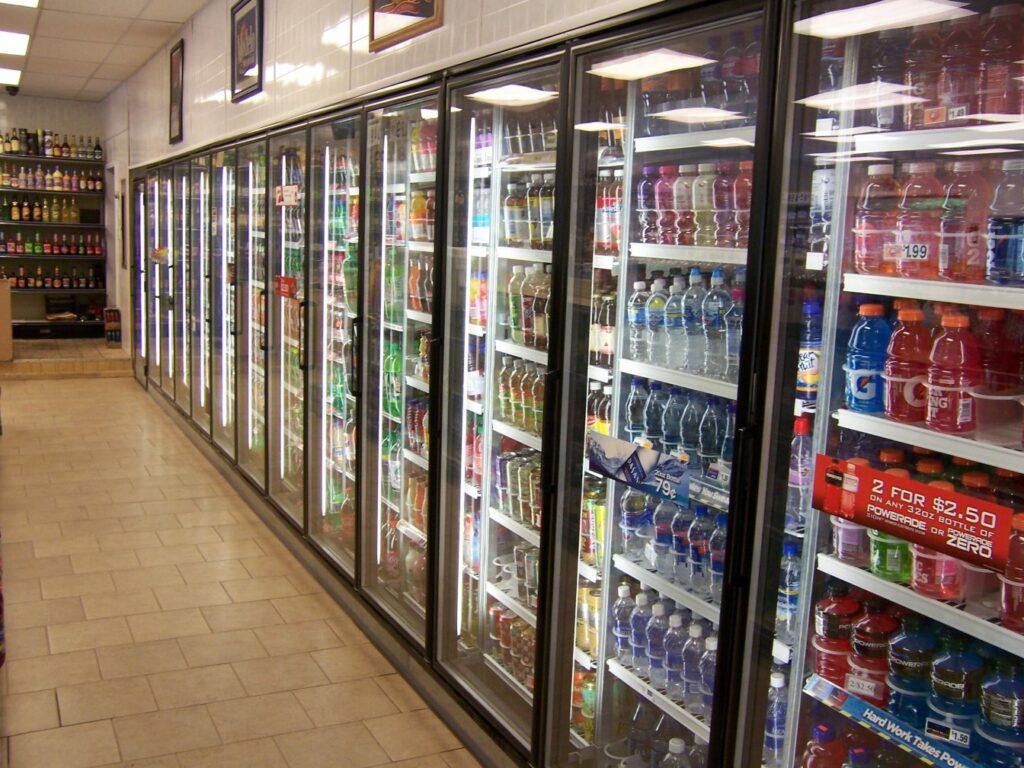
Commercial refrigerators and freezers are among the biggest energy consumers in any food service or retail business. Operating around the clock, these units account for a significant share of your electricity bill, and if they’re running inefficiently, that cost adds up fast.
Reducing energy consumption doesn’t always require a major investment. Simple steps like correct temperature settings, regular maintenance, and smart placement can make a real difference to your running costs.
Typical commercial refrigerators consume up to 17,000 kilowatt-hours of electricity per year, while large commercial freezers can draw up to 38,000 kWh annually. At current Australian electricity prices, that translates to thousands of dollars in running costs per unit every year. For businesses running multiple fridges or freezers, energy efficiency matters more than most owners account for when they first budget for equipment.
A combination of smart buying decisions, proper settings, and regular maintenance can significantly reduce energy consumption and operational costs without compromising food quality or safety.
Choosing an Energy-Efficient Commercial Fridge or Freezer
If you’re in the market for new commercial refrigeration equipment, the model you choose will have the biggest impact on your long-term energy use.
Energy Star Ratings and Labels
Australia’s Energy Rating label system gives you a simple way to compare the electricity consumption of different models before you buy. The more stars, the more energy efficient the product.
When comparing refrigeration units, always check the energy label. A higher-rated unit will cost less to run year after year, which often outweighs a higher upfront purchase price.
Energy Star products are independently tested and certified to meet established standards for energy efficiency. Choosing Energy Star-rated commercial refrigeration equipment is one of the simplest ways to reduce your total energy consumption from day one.
Climate Class
Climate class refers to the ambient temperature range within which a unit is designed to operate. Choosing a model suited to your environment, whether that’s a hot commercial kitchen or an air-conditioned retail space, means the compressor won’t work harder than it needs to. A mismatch between the climate class and actual conditions forces the unit to draw more power to maintain optimal temperatures, increasing both energy use and component wear.
Glass Doors vs Solid Doors
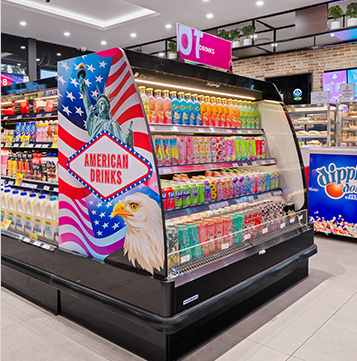
Glass doors allow customers and staff to see the contents without opening the unit, significantly reducing cold air loss. For retail display refrigeration, energy-efficient fridges with glass doors typically consume less electricity than open-case units, especially when paired with night curtains after hours.
Solid doors offer better insulation for storage applications where access is less frequent. Consider which suits your workload before purchasing.
Size and Net Capacity
Bigger isn’t always better. A unit that’s too large for your needs uses more energy to maintain temperatures in a partially empty cabinet. Equally, an undersized unit works harder and runs more frequently. Match net capacity to your actual requirements.
Getting The Temperature Control Right
Incorrect temperature settings are one of the most common causes of unnecessary power consumption in commercial refrigeration. Running a unit colder than required forces the compressor to work harder and longer, increasing energy use without any benefit to food quality or food safety.
As a general guide:
- Commercial fridges should be kept below 5°C, ideally between 1°C and 4°C, in line with Australian food safety requirements
- Commercial freezers should be set at -18°C or below for standard frozen storage
- Display cabinets may have specific temperature requirements depending on their contents, so check manufacturer guidelines
Maintaining optimal temperatures consistently is more energy-efficient than allowing temperatures to fluctuate and constantly correcting them. A quality thermostat and regular calibration checks help maintain precise temperature control.
Avoid setting units colder than necessary. Every degree below the required range adds to your total energy consumption.
Where Should You Put Your Refrigeration Equipment Matters
The location of your commercial refrigeration units directly affects how much electricity they draw.
Keep units away from direct sunlight. Sunlight increases the ambient temperature around the unit, forcing the compressor to work harder to maintain the unit’s internal temperature.
Allow adequate space for air circulation. Commercial refrigeration equipment needs clear space around the condenser coils, typically at the rear or underneath the unit, to dissipate heat effectively. Restricting airflow over the heat exchange coils causes the system to run longer and use more power.
Avoid placing units next to heat-generating equipment. Positioning a fridge or freezer next to an oven, grill, or dishwasher significantly increases its energy usage. The unit constantly fights the ambient heat, leading to higher power consumption, faster wear, and a shorter equipment lifespan.
Keeping Your Units Running Efficiently
Regular maintenance is one of the most effective ways to reduce energy consumption and extend equipment longevity. A well-maintained unit runs more efficiently, uses less power, and lasts longer, directly lowering your operational costs.
| Maintenance Task | What to Do |
| Clean coils | Dust and grease build-up on condenser and evaporator coils limits heat transfer and forces the compressor to work harder. Clean coils regularly, with frequency depending on your environment. High-grease commercial kitchens will need this done more often than a standard retail setting. |
| Check door seals and gaskets | Worn seals allow cold air to escape and warm, moist air to enter the cabinet, causing the unit to run more frequently and increasing the risk of frost build-up. Replace gaskets as soon as you notice cracking, warping, or gaps. A quick test: close the door on a piece of paper. If it slides out easily, the seal needs attention. |
| Manage defrost cycles | Ice build-up acts as insulation around the evaporator coils, reducing efficiency. Most modern units have automatic defrost cycles, but check they’re functioning correctly. Excess frost build-up is a sign that defrosting isn’t occurring often enough, or that door seals are compromised. |
| Anti-sweat heaters | These prevent condensation on glass doors but draw additional power and don’t need to run continuously. Installing adaptive controls allows them to activate only when ambient conditions require it, reducing energy use without affecting performance. |
| Compressor and refrigerant | A compressor running constantly or cycling more frequently than expected often signals a refrigerant issue, a blocked component, or a system that needs servicing. Low refrigerant forces the unit to work harder, increasing electricity consumption and accelerating wear. Have a qualified technician inspect the system if you notice unusual behaviour. |
Night Curtains and Lighting Controls
For businesses with open refrigerated cabinets, there are worthwhile energy savings available outside trading hours.
Install night curtains on open display cases. These insulated covers reduce cold air loss overnight, lowering the unit’s energy usage during hours when products don’t need to be visible.
Install motion sensors for case lighting. Case lighting that runs around the clock adds unnecessary heat inside the cabinet and draws constant power. Motion-sensor controls ensure lights are on only when needed, reducing both electricity consumption and the thermal load on the refrigeration system.
When to Upgrade Your Commercial Refrigeration Equipment
Older units are often far less efficient than modern models. If your commercial refrigeration equipment is ageing, it’s worth calculating whether running costs justify keeping it.
An inefficient older fridge or freezer can cost significantly more to run annually than a newer energy-efficient model. When you factor in repair frequency, electricity consumption, and the risk of unexpected failure, which can mean food spoilage and lost stock, the total cost of keeping an old unit can exceed the cost of replacing it.
Some questions worth working through:
- What is your current unit’s annual kWh consumption?
- What would an equivalent energy-efficient model consume?
- What is the difference in running costs at current electricity prices?
- What is the purchase price of the new unit?
In many cases, a newer energy-efficient commercial refrigeration unit pays for itself over time through lower utility bills and reduced maintenance costs.
The Australian government and some state governments also offer rebates and incentives for businesses upgrading to energy-efficient products. It’s worth checking what schemes are currently available before you purchase, as these can reduce the upfront cost considerably.
Energy Efficiency and Food Safety Go Hand in Hand
A well-maintained unit running at optimal temperatures uses less energy and correctly preserves food. Consistent temperature control reduces food spoilage, protects food quality, and keeps your business compliant with Australian food safety requirements.
An inefficient unit that struggles to maintain temperature is not only expensive to run but also poses a genuine food safety risk. Regular maintenance and the right temperature settings protect both your running costs and your products.
Your Checklist on How to Reduce Commercial Refrigeration Running Costs
To significantly reduce energy consumption and lower operational costs from your commercial refrigeration equipment:
- Choose energy-efficient models with strong Energy Star ratings
- Match the climate class and net capacity to your actual environment and needs
- Set temperatures to the correct range, no colder than necessary
- Position units away from heat sources and direct sunlight, with adequate airflow
- Clean coils, check door seals, and service the compressor regularly
- Install night curtains and motion-sensor lighting on display cases
- Weigh up the total cost of ageing equipment against upgrading to a newer model
- Check Australian government rebates before purchasing new equipment
Talk to JDR Group About Your Commercial Refrigeration
JDR Group supplies, installs, services, and repairs commercial refrigeration systems across Sydney. Whether you’re looking to improve the efficiency of your existing equipment or need advice on upgrading to a more energy-efficient model, our team can help.
Contact us today or call 1300 598 508 to discuss your commercial refrigeration requirements.